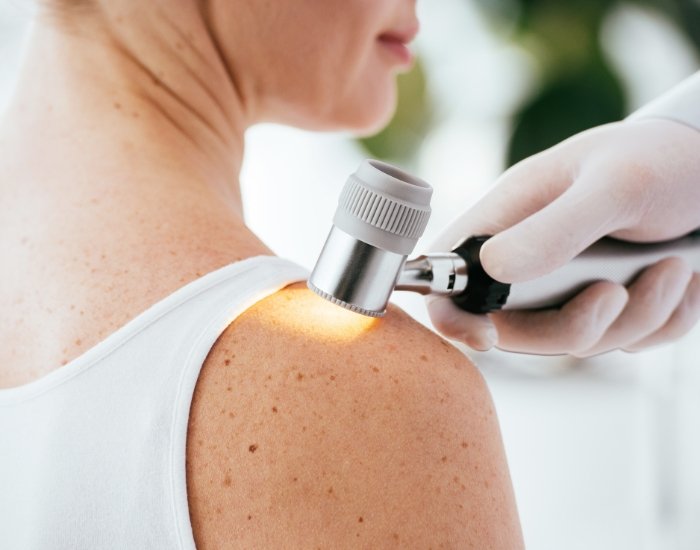
Bottom line: Yes, a primary care team can diagnose and treat most everyday skin problems. At Lifecare Primary Medical in Richmond, TX, adults are seen for rashes, hives, acne, eczema, psoriasis, skin infections and changing moles, often the same day. We examine the skin, review your medicines and health conditions, order in-house blood work when it helps, start evidence-based treatment and refer you to a dermatologist when a biopsy or specialist care is needed.
Clinical guide
Common skin problems we treat in primary care
Your skin is often the first place a health problem shows up, and many everyday skin conditions can be diagnosed and treated by a primary care team without waiting weeks for a specialist. At Lifecare Primary Medical, adult skin care is part of internal medicine: we look at the rash, spot or breakout itself and at the rest of your health, because diabetes, thyroid disease, allergies, stress and new medications can all change how your skin looks and heals.
- Rashes and hives, including allergic reactions, contact dermatitis from soaps, plants or jewelry, and rashes with no obvious cause
- Adult acne, from occasional breakouts to persistent or painful acne along the jaw and chin
- Eczema and psoriasis, with plans to calm flares, ease itching and protect the skin barrier
- Skin infections, such as cellulitis, fungal infections of the feet, groin or nails, cold sores and shingles
- Moles and spots that are new, changing or simply worrying you
- Itching and dry skin, including itch linked to other conditions or medicines
We are a primary care and internal medicine practice, not a dermatology office. When a skin problem needs a dermatologist, we refer you, help arrange the visit and stay involved in your overall care. If your rash may be allergy-related, our allergy care team can help sort out triggers.
How we evaluate a skin concern
Most skin conditions are diagnosed by looking closely at the skin and asking the right questions. Where a rash started, how fast it spread, whether it itches or hurts, what you have touched, eaten or started taking, and whether anyone at home has the same symptoms all point toward the cause.
What we check in the office
- A focused skin exam of the area of concern and, when helpful, nearby skin, nails and scalp
- A medication and product review, since new prescriptions, supplements, detergents and skin products are common rash triggers
- In-house blood work when it adds value, such as a metabolic panel or A1C when frequent infections or slow healing raise a question about blood sugar
- A look at related conditions, including diabetes, thyroid disease and circulation problems that affect skin health
For cellulitis, MedlinePlus notes that a provider may mark the edge of the redness with a pen to see whether it is spreading. Risk factors include breaks in the skin, cracks between the toes, insect or animal bites, diabetes, vascular disease and medicines that suppress the immune system.
Moles, spots and skin cancer warning signs
Melanoma makes up only about 1% of skin cancers but causes most skin cancer deaths, according to the U.S. Preventive Services Task Force. Caught early, it is very treatable: five-year survival is about 99.5% when melanoma is localized, compared with about 31.9% once it has spread to distant parts of the body. The American Academy of Dermatology recommends watching for the ABCDEs:
| Sign | What to look for |
|---|
| Asymmetry | One half of the spot does not match the other half |
| Border | Edges that are irregular, scalloped or poorly defined |
| Color | Several shades of tan, brown or black, or patches of white, red or blue |
| Diameter | Usually larger than about 6 mm (a pencil eraser), though melanomas can be smaller |
| Evolving | A spot that changes in size, shape or color, or looks different from your other moles |
Also have a spot checked if it is new, itches, bleeds or will not heal. In darker skin tones, melanoma more often appears on the palms, soles or under the nails, so a new dark line in a nail deserves attention.
The USPSTF has found the evidence insufficient to recommend routine full-body skin screening for adults without symptoms, but that does not apply to a spot you are worried about or to people with a personal or family history of skin cancer. If we find a mole that may need a biopsy or removal, we refer you to a dermatologist promptly. You can read more in our article on malignant melanoma.
Evidence-based treatment for acne, eczema and infections
Treatment is matched to the diagnosis, how severe it is and how it affects your daily life. Common approaches include:
- Acne: topical retinoids, benzoyl peroxide and topical antibiotics, often in combination, with oral antibiotics for moderate to severe acne for a limited time and hormonal options for some women. The AAD advises giving a new plan at least 6 to 8 weeks before judging results.
- Eczema and dermatitis: gentle skin care, daily moisturizers, identifying triggers and prescription anti-inflammatory creams during flares.
- Psoriasis: topical treatment for limited plaques and referral for advanced therapies when psoriasis is widespread or affects the joints.
- Cellulitis and bacterial infections: usually oral antibiotics, rest and keeping the area raised. Most cases clear within 7 to 10 days of treatment.
- Fungal infections and cold sores: antifungal or antiviral medicine, plus steps to prevent repeat infections, especially in people with diabetes.
Severe nodular acne, acne that leaves scars, suspicious lesions, skin disease that does not respond to treatment and cosmetic concerns are best handled by a dermatologist, and we will tell you plainly when that is the better path.
What to expect at your skin visit in Richmond
- Check-in. Walk in on a weekday or book ahead. Bring a list of your medicines and any products you have used on the area. Photos of how the rash looked earlier are helpful.
- History and exam. Your provider asks when it started and what changed, then examines the skin.
- Tests if needed. Blood work can be drawn in our office when a skin problem may be linked to another condition.
- Your treatment plan. You leave with a clear explanation, any prescriptions and skin care instructions you can follow at home.
- Follow-up or referral. We schedule a recheck for infections or new treatments, and refer you to a dermatologist when specialist care is needed. Telehealth visits are also available for some follow-ups.
When a skin problem is urgent
Call 911 for a rash with swelling of the face, lips or tongue, trouble breathing or swallowing, or signs of a severe allergic reaction. Seek same-day care for a red, hot, painful area that is spreading quickly, especially with fever or chills, red streaks moving away from a wound, a blistering or peeling rash with fever, or a painful rash near the eye. For everyday skin concerns, our walk-in clinic sees adults Monday through Friday, and our primary care and preventive care visits keep the rest of your health on track.